The Biggest AI Mistakes Beginners Make (And How to Avoid Them) AI mistakes beginners make are more common than you might think. Artificial intelligence has become an incredible tool for writing, researching, brainstorming, coding, designing, and improving productivity. However, many first-time users expect AI to do everything perfectly from the start. The truth is that …
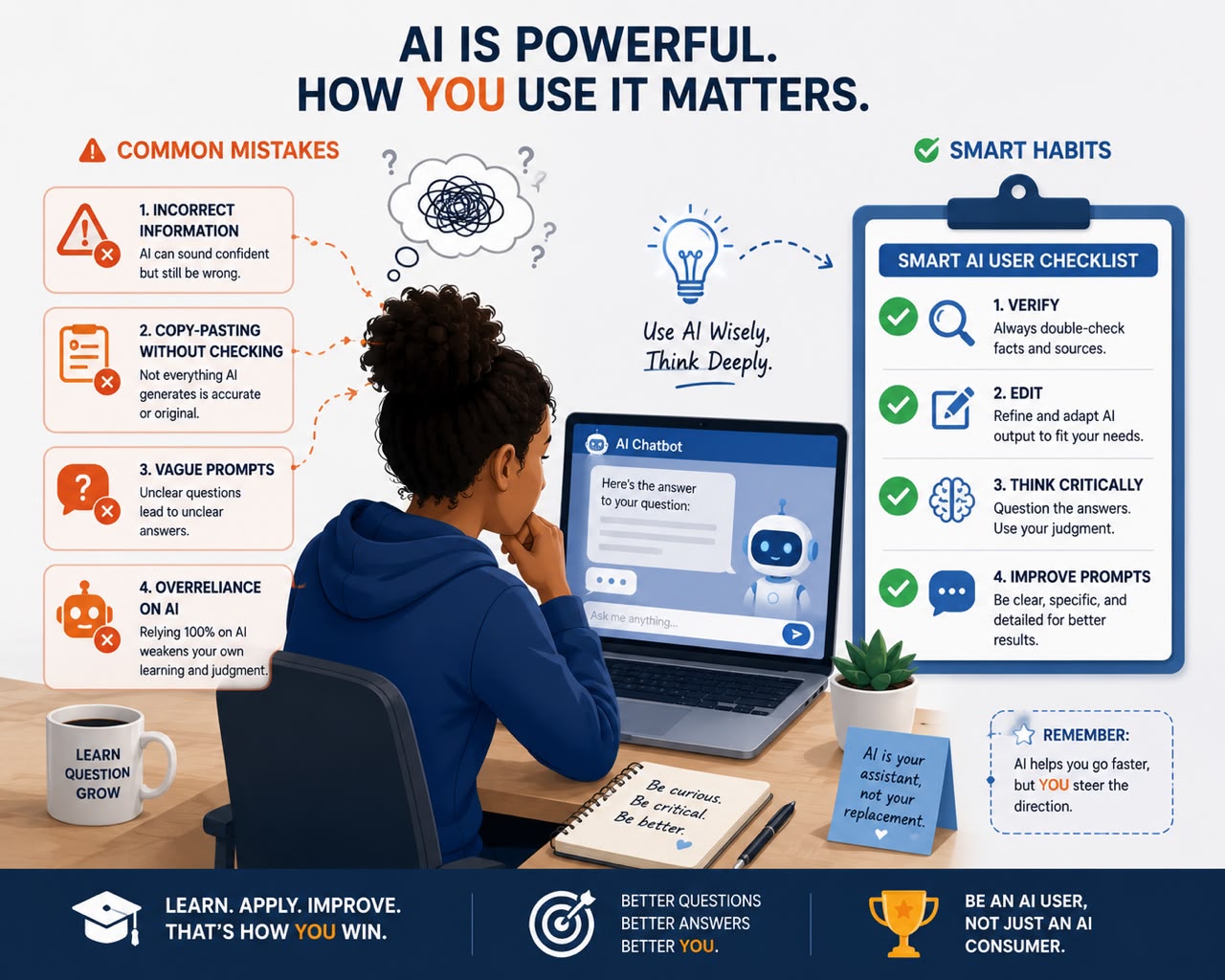
The Biggest AI Mistakes Beginners Make (And How to Avoid Them)
AI mistakes beginners make are more common than you might think. Artificial intelligence has become an incredible tool for writing, researching, brainstorming, coding, designing, and improving productivity. However, many first-time users expect AI to do everything perfectly from the start.
The truth is that AI is most effective when it’s used as a partner rather than a replacement for human thinking. Learning how to use AI well is a skill, and like any skill, it takes practice.
If you’re just getting started, avoiding a few common mistakes can save you time, improve the quality of your work, and help you get much better results from AI.
1. Expecting AI to Be Perfect
One of the biggest mistakes beginners make is assuming that AI is always correct.
AI can generate impressive responses, but it can also misunderstand a question, make factual errors, or provide outdated information. This is especially important when you’re using AI for business decisions, academic work, healthcare information, or financial planning.
How to Avoid It
- Verify important facts from reliable sources.
- Double-check statistics, names, and dates.
- Review AI-generated content before publishing or sharing it.
Think of AI as an intelligent assistant—not an infallible expert.
2. Writing Vague Prompts
The quality of AI’s response depends largely on the quality of your prompt.
For example, asking:
“Write about marketing.”
will usually produce a generic response.
A better prompt would be:
“Write a 700-word beginner-friendly blog post explaining five affordable digital marketing strategies for small businesses.”
The more specific your request, the more useful the result.
How to Avoid It
Include:
- Your goal
- Target audience
- Desired tone
- Length
- Format
- Important details
Clear instructions help AI generate better content.
3. Copying AI Content Without Editing
Another common mistake is copying AI-generated text directly into a blog, email, assignment, or report without reviewing it.
While AI can create excellent first drafts, your own voice, expertise, and experience are what make content valuable.
Readers appreciate authenticity.
How to Avoid It
Always:
- Edit the content.
- Add personal insights.
- Include examples.
- Improve readability.
- Fact-check important claims.
AI should help you create content—not replace your unique perspective.
4. Using AI for Everything
AI is powerful, but not every task requires it.
Some beginners rely on AI for every small decision, from writing short messages to solving simple problems they could handle themselves.
Overdependence can reduce opportunities to develop critical thinking and creativity.
How to Avoid It
Use AI to:
- Save time on repetitive tasks.
- Generate ideas.
- Organize information.
- Improve productivity.
Continue using your own judgment, creativity, and expertise for important decisions.
5. Ignoring Privacy and Sensitive Information
Many people unknowingly paste confidential information into AI tools.
This may include:
- Customer data
- Business strategies
- Passwords
- Financial records
- Personal identification
- Private company documents
Protecting sensitive information is essential.
How to Avoid It
Never share confidential or personal information with AI tools unless you understand the platform’s privacy policies and your organization’s security guidelines.
When in doubt, remove identifying details before using AI.
6. Not Learning Prompt Writing
Prompt writing, often called prompt engineering, is becoming one of the most valuable AI skills.
Many beginners ask one simple question, receive an average response, and assume AI isn’t very useful.
In reality, improving your prompts often improves the results dramatically.
How to Avoid It
Experiment with prompts by adding:
- Context
- Examples
- Desired writing style
- Audience
- Step-by-step instructions
- Specific goals
Better prompts usually produce better answers.
7. Forgetting That AI Needs Human Judgment
AI can analyze information, summarize documents, and suggest solutions, but it doesn’t understand your personal values, business goals, or unique circumstances the way you do.
Important decisions should always involve human thinking.
How to Avoid It
Use AI to:
- Gather ideas.
- Compare options.
- Organize information.
Then apply your own experience before making final decisions.
8. Expecting Instant Expertise
Using AI effectively is a skill that develops over time.
Your first few interactions may feel disappointing simply because you’re still learning how to communicate with AI.
The more you practice, the better your results become.
How to Avoid It
Spend time experimenting.
Try different prompts.
Compare responses.
Learn from each interaction.
Like any new technology, confidence comes with experience.
Best Practices for Using AI Successfully
If you’re new to artificial intelligence, these habits will help you get the most from every interaction:
- Be clear and specific with your prompts.
- Review and edit AI-generated content.
- Verify facts before sharing information.
- Use AI to support your work, not replace your thinking.
- Protect sensitive and confidential information.
- Keep learning about new AI tools and features.
- Experiment with different ways of asking questions.
- Combine AI assistance with your own creativity and expertise.
These simple practices can make a significant difference in the quality of your results.
Why Human Skills Still Matter
Despite the rapid growth of AI, human skills remain essential.
AI cannot replace:
- Empathy
- Leadership
- Emotional intelligence
- Ethical decision-making
- Creativity
- Critical thinking
- Relationship-building
These qualities help people solve complex problems, collaborate effectively, and make informed decisions.
The future belongs to individuals who know how to combine AI capabilities with strong human skills.
Final Thoughts
AI mistakes beginners make often come from unrealistic expectations rather than limitations in the technology itself. AI is an incredibly powerful assistant, but it performs best when guided by clear instructions, thoughtful prompts, and careful human oversight.
As you become more familiar with AI, you’ll learn how to ask better questions, refine responses, and integrate AI into your daily workflow without relying on it completely.
Remember, AI is not here to replace your knowledge or creativity. It’s here to amplify your abilities, save time on repetitive tasks, and help you work smarter. By avoiding these common beginner mistakes, you’ll build confidence, improve your results, and unlock the full potential of artificial intelligence.