The Beginner's Guide to Using AI Without Feeling Overwhelmed The Beginner's Guide to Using AI Without Feeling Overwhelmed starts with one important truth: you don't need to be a programmer, data scientist, or tech expert to benefit from artificial intelligence. AI has become one of the most accessible technologies available today, and millions of people …
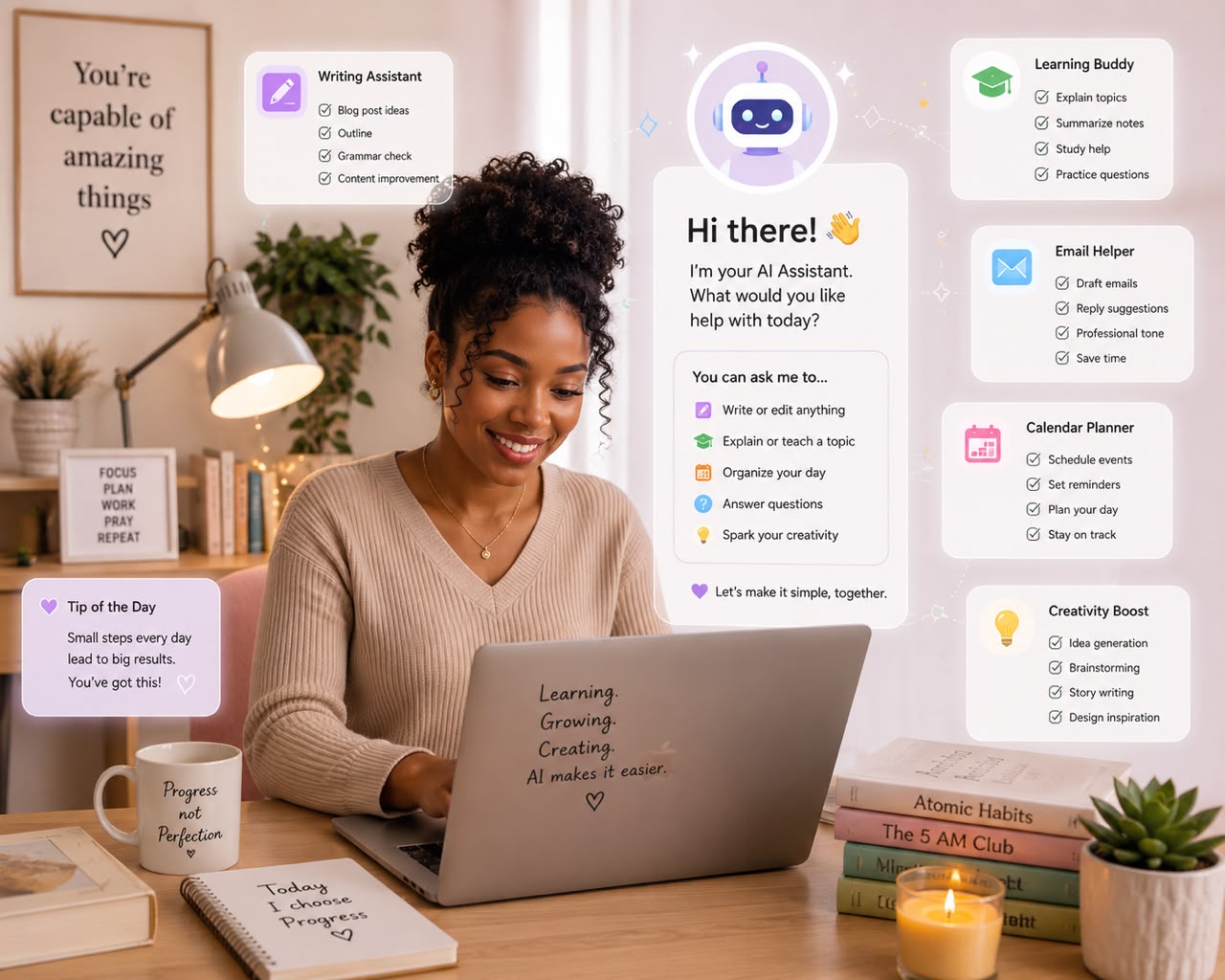
The Beginner’s Guide to Using AI Without Feeling Overwhelmed
The Beginner’s Guide to Using AI Without Feeling Overwhelmed starts with one important truth: you don’t need to be a programmer, data scientist, or tech expert to benefit from artificial intelligence. AI has become one of the most accessible technologies available today, and millions of people use it every day without needing advanced technical skills.
If you’ve been curious about AI but felt intimidated by the endless list of tools, technical terms, and constant updates, you’re not alone. Many beginners hesitate because they believe AI is too complicated or fear they’ll use it incorrectly.
The good news is that learning AI can be simple when you take it one step at a time. Like learning to use email, smartphones, or social media years ago, AI becomes much easier once you understand the basics.
What Is AI, Really?
Artificial intelligence refers to computer systems that can perform tasks typically requiring human intelligence. These tasks include understanding language, answering questions, generating images, writing content, analyzing data, recognizing patterns, and making predictions.
Think of AI as a highly capable assistant rather than a replacement for human thinking. It can help you work faster, organize information, and generate ideas, but it still relies on your guidance, judgment, and creativity.
The better your instructions, the better AI can support you.
Why AI Feels Overwhelming
One reason AI feels intimidating is the sheer number of tools available. Every week, new AI applications seem to appear, each promising to transform the way you work.
It’s easy to think you need to learn them all—but you don’t.
Most people only need a handful of AI tools that fit their personal or professional goals. Instead of chasing every new trend, focus on learning one tool well before exploring others.
Remember, confidence comes from practice, not from knowing everything.
Start with One Simple Task
The easiest way to learn AI is by using it for something you already do every day.
For example, you can ask AI to:
- Draft an email
- Summarize an article
- Brainstorm blog ideas
- Create a to-do list
- Explain a difficult concept
- Generate social media captions
- Rewrite a paragraph
- Plan your weekly schedule
By solving familiar problems, you’ll quickly see how AI fits into your daily routine.
Learn How to Write Better Prompts
A prompt is simply the instruction you give an AI tool.
Instead of asking vague questions, provide clear details.
For example:
Less effective prompt:
Write something about marketing.
Better prompt:
Write a 500-word beginner-friendly blog post explaining digital marketing for small business owners, using simple language and practical examples.
The more context you provide, the more useful the response will be.
Prompt writing is a skill that improves with practice.
Don’t Expect AI to Be Perfect
AI is incredibly helpful, but it’s not flawless.
Sometimes it may misunderstand your request, provide incomplete information, or make factual mistakes. That’s why reviewing and editing AI-generated content is essential.
Always:
- Verify important facts
- Add your personal knowledge
- Edit for clarity
- Include your own experiences
- Adjust the tone to match your audience
Think of AI as your first draft assistant—not your final decision-maker.
Choose a Few Reliable AI Tools
Instead of installing dozens of AI applications, begin with a small toolkit based on your needs.
For example:
- A conversational AI assistant for writing and brainstorming
- A grammar and proofreading tool
- An AI-powered design platform for simple graphics
- A meeting transcription tool
- An AI scheduling assistant
Learning a few tools deeply is far more valuable than trying every new app that launches.
Use AI to Learn Faster
One of AI’s greatest strengths is education.
You can ask AI to explain complex topics in simple language, generate quizzes, summarize books, provide coding examples, or help you understand difficult concepts step by step.
Instead of replacing learning, AI can make learning more personalized and interactive.
This makes it an excellent companion for students, professionals, and lifelong learners.
Protect Your Privacy
While AI tools are convenient, it’s important to use them responsibly.
Avoid sharing:
- Passwords
- Banking information
- Confidential business documents
- Personal identification details
- Sensitive client information
Treat AI platforms the same way you would any online service—be mindful of the information you provide.
Responsible AI use includes protecting your own privacy and respecting the privacy of others.
Focus on Progress, Not Perfection
Many beginners delay using AI because they worry about making mistakes.
The truth is, everyone starts somewhere.
Your first prompt may not produce the perfect answer, and that’s okay. Each interaction teaches you how to communicate more effectively with AI.
The more you practice, the more natural the process becomes.
Consistency matters more than perfection.
AI Is a Tool—Not a Replacement
It’s important to remember that AI works best when combined with human skills.
AI can generate ideas.
You provide creativity.
AI can organize information.
You make decisions.
AI can automate repetitive tasks.
You build relationships, solve problems, and think critically.
The future belongs to people who know how to collaborate with AI while continuing to develop uniquely human skills.
Final Thoughts
The Beginner’s Guide to Using AI Without Feeling Overwhelmed is ultimately about building confidence through small, consistent steps. You don’t need to master every AI tool or understand every technical concept to benefit from artificial intelligence.
Start with one simple task, learn how to write clear prompts, verify AI-generated information, and gradually explore new ways AI can support your goals. Over time, you’ll discover that AI isn’t something to fear—it’s a practical tool that can help you save time, improve productivity, and learn more efficiently.
The journey into AI doesn’t begin with expertise. It begins with curiosity, practice, and a willingness to learn one step at a time.