AI Habits That Can Transform Your Workday and Boost Your Productivity AI habits that can transform your workday are becoming essential for professionals who want to save time, reduce stress, and accomplish more without working longer hours. Artificial intelligence is no longer just a futuristic concept—it is now a practical tool that can improve everyday …
AI Habits That Can Transform Your Workday and Boost Your Productivity
AI habits that can transform your workday are becoming essential for professionals who want to save time, reduce stress, and accomplish more without working longer hours. Artificial intelligence is no longer just a futuristic concept—it is now a practical tool that can improve everyday workflows.
Many people use AI occasionally when they need help with a specific task. However, the real power of AI comes from creating consistent habits around how you use it.
Just like successful people build habits around planning, learning, and organization, professionals can develop AI habits that make their work faster, smarter, and more efficient.
The goal is not to let AI control your work. The goal is to use AI intentionally so you can focus more energy on creativity, decision-making, and meaningful tasks.
Why AI Habits Matter in Modern Work
Workplaces are becoming increasingly demanding. Professionals manage emails, meetings, projects, deadlines, and constant information overload every day.
Without effective systems, it is easy to feel overwhelmed.
AI habits help create better systems by allowing you to:
- Automate repetitive tasks
- Organize information faster
- Improve decision-making
- Reduce wasted time
- Stay focused on priorities
- Work more strategically
Small changes in how you use AI can create significant improvements over time.
1. Start Your Day With an AI Planning Habit
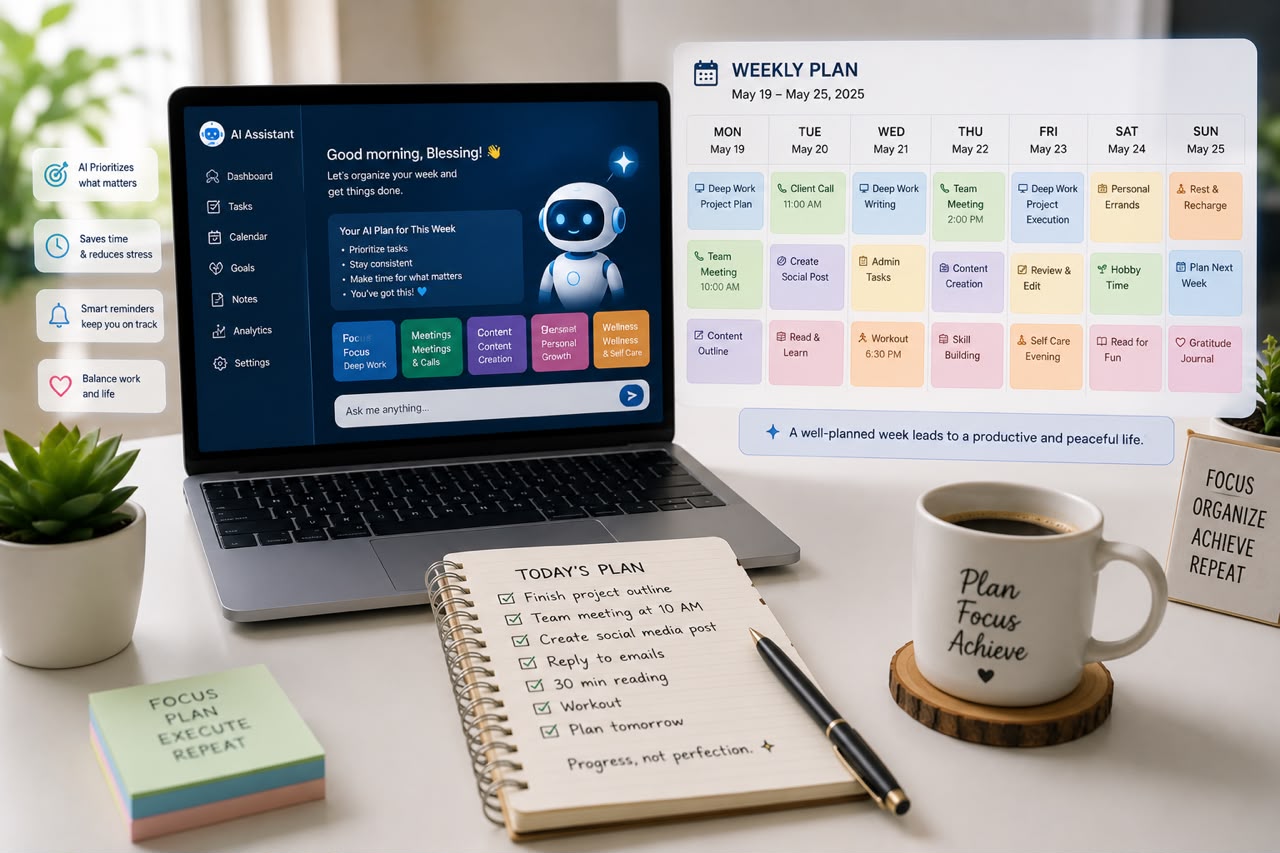
One of the most powerful AI habits is using artificial intelligence to plan your day before you begin working.
Instead of immediately responding to emails or jumping between tasks, spend a few minutes creating a clear plan.
You can ask AI:
- “Help me prioritize my tasks for today.”
- “Create a schedule based on my deadlines.”
- “Identify the three most important things I should complete today.”
This helps you begin your day with direction instead of reacting to whatever appears first.
A focused morning routine often leads to a more productive workday.
2. Use AI to Manage Your To-Do List
Many professionals create long task lists but struggle to decide what matters most.
AI can help transform a simple list into an organized action plan.
For example, AI can:
- Categorize tasks by importance
- Suggest deadlines
- Break large projects into smaller steps
- Identify tasks that can be automated
Instead of feeling overwhelmed by everything you need to do, you have a clearer path forward.
3. Create a Habit of Using AI for Research
Research can consume hours, especially when gathering information from different sources.
AI can help speed up the process by:
- Summarizing information
- Explaining complex topics
- Generating research questions
- Organizing notes
- Comparing ideas
However, always verify important information before making decisions based on AI-generated responses.
The goal is faster research, not careless research.
4. Use AI as a Writing Assistant
Writing is part of almost every professional role.
Whether you’re creating emails, reports, proposals, presentations, or social media content, AI can help improve your writing process.
AI can assist with:
- Creating first drafts
- Improving clarity
- Adjusting tone
- Fixing grammar
- Making content more engaging
Instead of spending too much time finding the right words, you can focus on sharing your ideas effectively.
5. Automate Repetitive Tasks
One of the most valuable AI habits is identifying tasks you repeat frequently and finding ways to automate them.
Examples include:
- Scheduling appointments
- Creating reports
- Organizing documents
- Sending reminders
- Sorting information
Automation reduces mental load and gives you more time for higher-value activities.
A few minutes spent setting up an automated process can save hours later.
6. Use AI for Better Meetings
Meetings often take up a large part of the workday.
AI tools can make meetings more productive by helping with:
- Creating agendas
- Taking notes
- Summarizing discussions
- Tracking action items
Instead of spending time trying to remember everything discussed, you can focus on participating and making decisions.
7. Build an AI Learning Habit
Technology changes quickly, and professionals who continue learning stay ahead.
Create a habit of spending time each week exploring:
- New AI tools
- Productivity techniques
- Industry updates
- Better AI workflows
You don’t need to master every AI tool. Focus on learning the ones that solve problems in your specific work.
8. Use AI for End-of-Day Reflection
A productive day does not end when work stops. Reflection helps you improve your workflow.
Ask AI questions like:
- “Review my completed tasks and identify my biggest achievements.”
- “What could I improve tomorrow?”
- “Help me plan my priorities for the next day.”
This creates a continuous improvement cycle.
9. Create Better Decision-Making Habits With AI
Professionals make countless decisions every day.
AI can help you think through problems by:
- Comparing options
- Identifying possible risks
- Suggesting solutions
- Providing different perspectives
However, the final decision should always come from your experience and judgment.
AI provides information. You provide wisdom.
10. Protect Time for Deep Work
AI can help you become more productive, but productivity is not about doing more tasks. It is about focusing on the right tasks.
Use AI to organize your schedule so you can protect time for:
- Creative work
- Strategic thinking
- Problem-solving
- Important projects
The best work often happens when distractions are reduced.
Common Mistakes When Building AI Habits
While AI offers many benefits, avoid these mistakes:
- Using AI without clear goals
- Depending on AI for every decision
- Sharing confidential information
- Accepting AI responses without reviewing them
- Collecting too many tools without learning how to use them
The best AI habit is intentional use.
How to Start Building AI Habits Today
You do not need to completely change your workflow overnight.
Start with simple steps:
- Use AI to plan your day.
- Automate one repetitive task.
- Use AI to improve your writing.
- Ask AI to summarize information.
- Review your productivity at the end of each week.
Small improvements create powerful results when practiced consistently.
The Future of Work With AI Habits
As artificial intelligence continues to develop, the professionals who benefit most will be those who learn how to integrate AI into their daily routines.
The future is not about humans competing with technology.
It is about humans using technology to become more creative, productive, and effective.
AI handles repetitive work.
Humans provide creativity, empathy, leadership, and innovation.
Together, they create a smarter way to work.
Final Thoughts
AI habits that can transform your workday are not about replacing your skills or making your work less meaningful. They are about creating smarter systems that help you save time and focus on what matters most.
By using AI for planning, research, communication, automation, and reflection, you can build a more productive and balanced work routine.
The biggest advantage of AI comes from consistency. When you turn helpful AI practices into daily habits, you create a workflow that allows you to work smarter, reduce stress, and achieve better results.