AI for Students: Study Less, Learn More With Smarter Learning Tools AI for students is changing the way learners approach education. For many years, studying meant spending long hours reading textbooks, searching through information, and trying to memorize large amounts of material. While dedication and effort are still important, artificial intelligence is making learning faster, …
AI for Students: Study Less, Learn More With Smarter Learning Tools
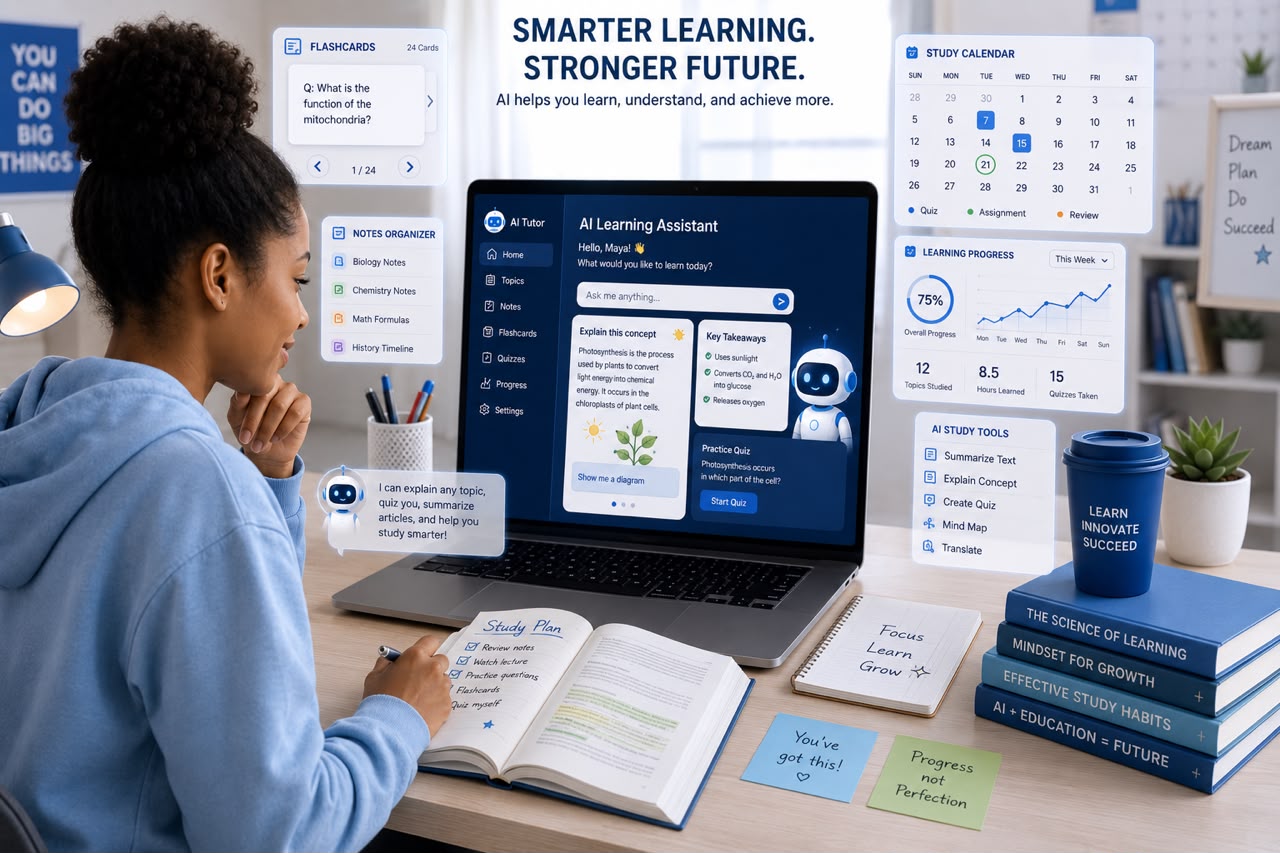
AI for students is changing the way learners approach education. For many years, studying meant spending long hours reading textbooks, searching through information, and trying to memorize large amounts of material. While dedication and effort are still important, artificial intelligence is making learning faster, more personalized, and more effective.
The goal of AI in education is not to help students avoid learning. Instead, it helps them understand concepts better, organize their time, and focus their energy on meaningful learning.
By using AI wisely, students can spend less time struggling with inefficient study methods and more time developing skills, understanding ideas, and applying knowledge.
How AI Is Changing the Way Students Learn
Traditional education often follows a one-size-fits-all approach. Every student receives the same lessons, assignments, and explanations, even though people learn differently.
AI introduces personalized learning by adapting to individual needs.
For example, AI tools can help students:
- Explain difficult topics in simple language
- Create personalized study plans
- Generate practice questions
- Summarize complex information
- Provide instant feedback
- Identify areas that need improvement
Instead of spending hours searching for answers, students can receive support whenever they need it.
1. AI Helps Students Understand Difficult Topics
One of the biggest challenges students face is understanding complex subjects.
Sometimes a textbook explanation may not make sense, or a classroom lesson may move too quickly.
AI can act as a personal tutor by explaining concepts in different ways.
A student can ask AI:
- “Explain this topic like I’m a beginner.”
- “Give me a real-life example.”
- “Break this concept into smaller steps.”
- “Compare these two ideas.”
This allows students to learn at their own pace without feeling embarrassed about asking questions.
2. AI Creates Smarter Study Plans
Many students struggle not because they lack ability, but because they don’t have an effective study strategy.
AI can help create structured learning plans based on:
- Exam dates
- Available study time
- Subjects
- Learning goals
- Current knowledge level
Instead of randomly studying, students can follow a clear plan that focuses on the most important areas.
A good study plan reduces stress and improves consistency.
3. AI Makes Research Faster
Research assignments can take hours, especially when students need to review multiple sources and organize information.
AI can help students:
- Find key points in large texts
- Summarize articles
- Generate research ideas
- Organize notes
- Create outlines
However, students should always verify information and use trusted sources. AI should support research, not replace critical thinking.
4. AI Improves Writing Skills
Writing assignments can be challenging, especially when students struggle with structure, grammar, or expressing their ideas clearly.
AI writing assistants can help students improve by:
- Checking grammar
- Suggesting better sentence structures
- Improving clarity
- Helping organize essays
- Providing writing feedback
The goal should not be copying AI-generated work. Instead, students should use AI as a writing coach to improve their own skills.
5. AI Helps Students Prepare for Exams
Exam preparation becomes easier when students use AI strategically.
AI can generate:
- Practice quizzes
- Flashcards
- Study summaries
- Mock questions
- Revision schedules
For example, instead of rereading notes repeatedly, students can ask AI to create questions that test their understanding.
Active learning techniques like practice testing often lead to better results than passive reading.
6. AI Saves Students Time
Time management is one of the biggest challenges students face.
Between classes, assignments, personal responsibilities, and exams, managing everything can feel overwhelming.
AI tools can help students:
- Organize tasks
- Create reminders
- Prioritize assignments
- Manage study schedules
- Track learning goals
By reducing time spent on organization, students can focus more on actual learning.
7. AI Encourages Independent Learning
One of the greatest benefits of AI for students is that it encourages curiosity.
Students no longer have to wait until the next class to explore a topic. They can ask questions, request explanations, and continue learning independently.
This creates a mindset of lifelong learning.
The best students are not those who memorize everything—they are those who know how to find, understand, and apply information.
Responsible Ways Students Should Use AI
While AI offers many benefits, students should use it responsibly.
Good practices include:
- Use AI to understand concepts, not cheat.
- Check information before accepting it as true.
- Add your own ideas and opinions.
- Follow school rules about AI usage.
- Use AI as a learning assistant, not a replacement for effort.
Education is about developing skills, not simply completing assignments.
The Future of AI in Education
AI will continue changing education by making learning more personalized, accessible, and interactive.
Future students may have AI-powered tutors that adapt lessons to their learning style, provide instant feedback, and help them build confidence.
However, teachers, mentors, and human relationships will remain essential. Education is not only about information—it is also about encouragement, creativity, communication, and personal growth.
AI can provide knowledge, but humans provide inspiration.
Final Thoughts
AI for students is creating new opportunities to learn smarter, save time, and improve academic performance. By helping with research, writing, planning, and understanding difficult concepts, AI allows students to focus on deeper learning rather than spending countless hours on inefficient study methods.
The key is using AI as a tool for growth. Students who combine artificial intelligence with curiosity, discipline, and critical thinking will be better prepared for the future.
The goal is not to study less because learning is less important. The goal is to study smarter so every hour of learning creates more value.