AI Won't Replace You—But Someone Using AI Might AI won't replace you simply because artificial intelligence exists. But a person who knows how to use AI effectively may eventually have an advantage over someone who refuses to learn it. That doesn't mean every job is disappearing. It means the way we work is changing. Think …
AI Won’t Replace You—But Someone Using AI Might
AI won’t replace you simply because artificial intelligence exists. But a person who knows how to use AI effectively may eventually have an advantage over someone who refuses to learn it.
That doesn’t mean every job is disappearing. It means the way we work is changing.
Think about what happened with calculators, spreadsheets, search engines, smartphones, and other technologies. People didn’t necessarily stop working because these tools appeared. Instead, the people who learned to use them often became faster and more capable.
AI is creating a similar shift.
The question isn’t only, “Will AI take my job?”
A more useful question is:
“How can I become better at my job because AI exists?”
AI Is Changing Tasks Before It Changes Jobs
Most jobs aren’t made up of one single activity.
A virtual assistant might manage calendars, write emails, organize information, research topics, create documents, and communicate with clients.
A marketer might research customers, write content, analyze campaigns, create ideas, and prepare reports.
A business owner might handle customer service, planning, bookkeeping, marketing, and operations.
AI can assist with many of these individual tasks.
That doesn’t necessarily mean the entire role disappears.
Instead, the person who knows how to use AI may complete certain tasks in minutes instead of hours.
And that creates a new kind of workplace advantage.
The Real Competition May Be Human + AI vs. Human Alone
Imagine two people with similar experience.
One spends three hours researching a topic, organizing information, creating a first draft, and reviewing it.
The other uses AI to handle the repetitive parts, then spends their time improving the ideas, checking accuracy, adding expertise, and making the final work better.
The second person isn’t necessarily working less.
They’re using their time differently.
AI becomes a productivity tool rather than a replacement for their judgment.
That’s why learning AI can be valuable even if you don’t work in technology.
But Don’t Become Dependent on AI
There’s an important warning here.
Knowing how to type a prompt isn’t the same as knowing how to use AI well.
If you accept everything AI produces without checking it, you can create inaccurate information, poor-quality work, or embarrassing mistakes.
The most valuable skill isn’t simply getting AI to produce something.
It’s knowing what to ask for, what to question, what to change, and what requires human judgment.
Your expertise still matters.
Start With the Work You Already Do
You don’t need to become an AI expert overnight.
Start by looking at your everyday responsibilities.
Ask:
- What tasks do I repeat every week?
- What takes me the longest?
- What do I frequently have to research?
- What do I procrastinate because it feels tedious?
- What tasks require creating a first draft?
- What information do I repeatedly organize or summarize?
These are good places to experiment with AI.
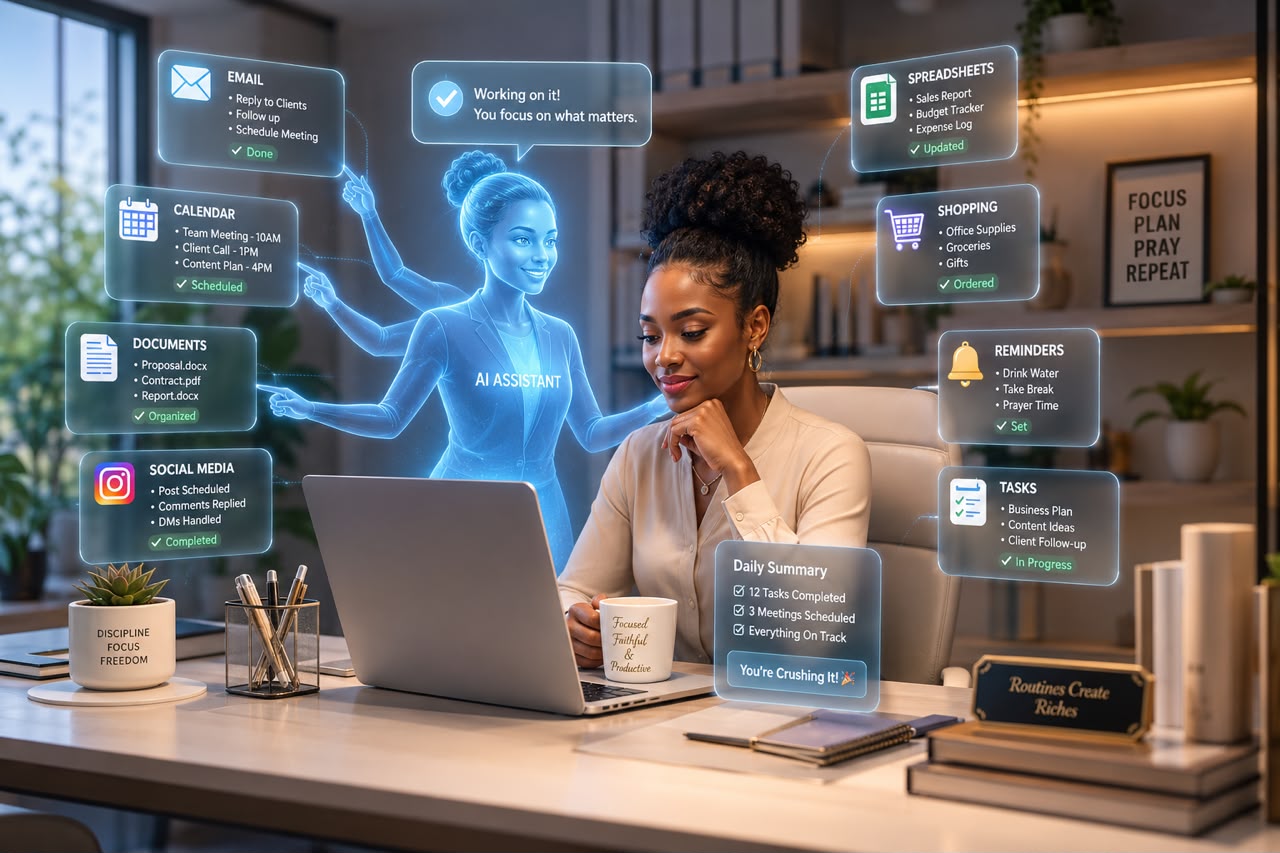
For example, AI can help you brainstorm ideas, summarize information, create first drafts, organize notes, turn information into checklists, analyze data, or help you prepare for meetings.
The goal isn’t to hand your entire job over to AI.
The goal is to remove unnecessary friction.
The Skills That Become More Valuable
As AI handles more repetitive tasks, distinctly human skills can become even more important.
Communication.
Critical thinking.
Creativity.
Problem-solving.
Emotional intelligence.
Leadership.
Decision-making.
Industry knowledge.
The ability to understand people.
AI can generate possibilities, but someone still needs to decide which possibility is useful.
It can produce an email, but someone needs to understand the relationship behind the email.
It can analyze information, but someone needs to determine what the information actually means for the business.
Don’t Wait Until You Need AI
One of the biggest career mistakes you can make is waiting until AI becomes unavoidable before learning how to use it.
You don’t need to master every new AI tool.
Choose one or two tools and start experimenting with real tasks.
Use AI to improve something you already know how to do.
Then evaluate the result.
What did it do well?
Where was it wrong?
What still required you?
How could you improve the process?
That’s how you move from simply using AI to actually working with AI.
Your Career Advantage Is Adaptability
The future of work won’t necessarily belong to the people who know every AI tool.
It will belong to people who can learn, adapt, think critically, and use technology without losing their human judgment.
So don’t spend all your energy worrying about whether AI will replace you.
Start becoming the person who knows how to use it.
AI won’t replace you—but refusing to adapt could make you easier to replace by someone who knows how to work alongside it.