7 pillars of wellness form the foundation of a healthy, balanced, and fulfilling life. True wellness is not just about eating well or exercising regularly, it involves nurturing multiple areas of your life so they work together in harmony. Many people focus on physical health alone, but burnout, stress, and dissatisfaction often stem from neglecting …
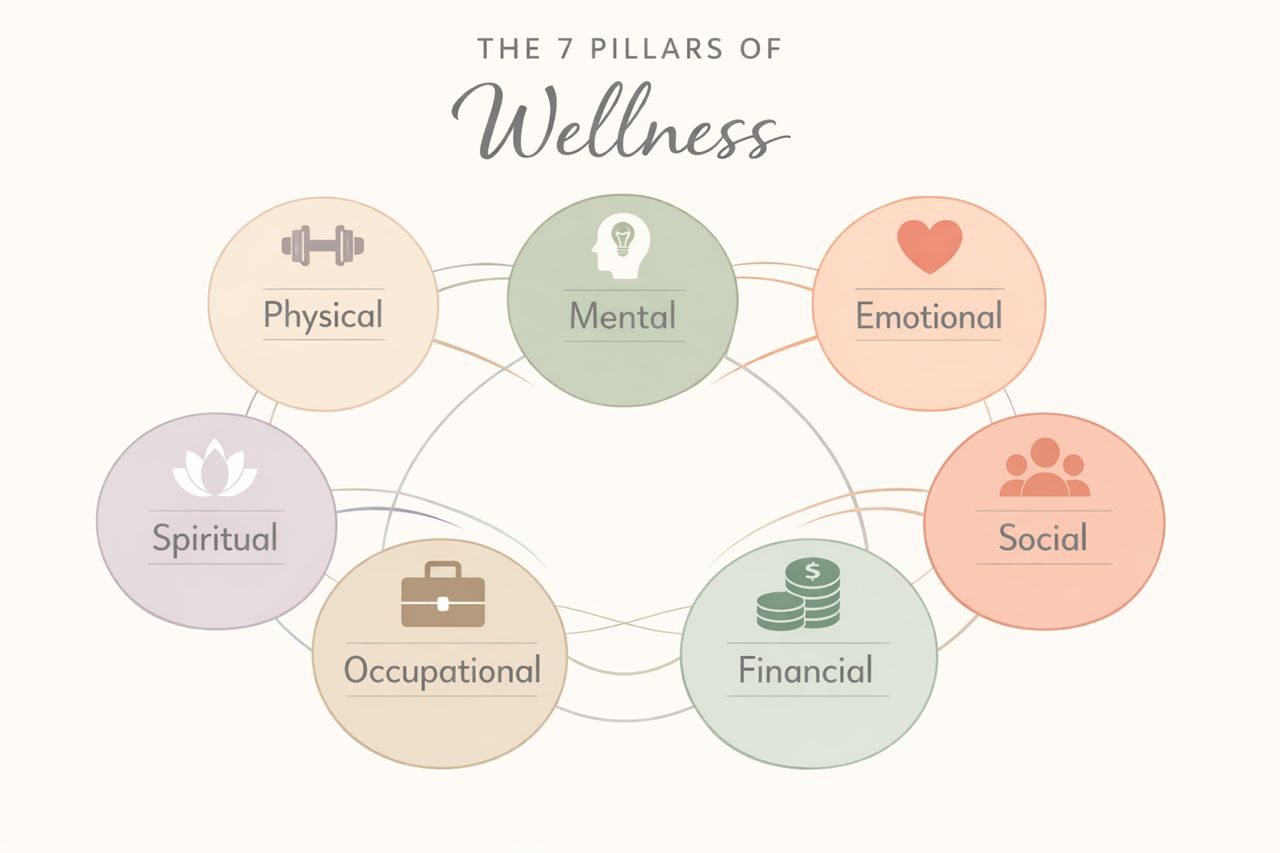
7 pillars of wellness form the foundation of a healthy, balanced, and fulfilling life. True wellness is not just about eating well or exercising regularly, it involves nurturing multiple areas of your life so they work together in harmony.
Many people focus on physical health alone, but burnout, stress, and dissatisfaction often stem from neglecting other important dimensions of well-being. Understanding the 7 pillars of wellness allows you to build a lifestyle that supports long-term vitality, emotional balance, and personal growth.
Let’s explore each pillar and how it contributes to complete wellness.
1. Physical Wellness
Physical wellness focuses on caring for your body through exercise, nutrition, sleep, and preventive healthcare.
This includes:
-
Eating balanced meals
-
Staying hydrated
-
Moving your body consistently
-
Getting adequate sleep
-
Scheduling medical checkups
When physical wellness is strong, energy levels improve and the body functions efficiently. However, physical health alone does not guarantee overall wellness — it is just one of the 7 pillars of wellness.
2. Emotional Wellness
Emotional wellness involves understanding, managing, and expressing your feelings in healthy ways. It means being aware of your emotions without being controlled by them.
Signs of emotional wellness include:
-
Healthy coping strategies
-
Ability to set boundaries
-
Emotional awareness
-
Resilience during challenges
Neglecting emotional health can lead to stress, anxiety, and strained relationships. Strengthening this pillar improves mental clarity and stability.
3. Mental Wellness
Mental wellness relates to cognitive health and the ability to think clearly, learn, and grow intellectually.
You can improve mental wellness by:
-
Reading regularly
-
Learning new skills
-
Practicing mindfulness
-
Reducing information overload
Among the 7 pillars of wellness, mental health is crucial for productivity, decision-making, and creativity.
4. Social Wellness
Humans are naturally social beings. Social wellness focuses on building healthy, supportive relationships.
This includes:
-
Maintaining meaningful friendships
-
Communicating openly
-
Participating in community activities
-
Surrounding yourself with positive influences
Strong social connections reduce stress and improve overall happiness. Social isolation, on the other hand, can negatively impact both mental and physical health.
5. Spiritual Wellness
Spiritual wellness involves connecting with your values, beliefs, and sense of purpose. It does not necessarily require religious practice, it can include meditation, reflection, gratitude, or service to others.
When spiritual wellness is strong:
-
You feel grounded
-
You experience inner peace
-
You make value-based decisions
This pillar often provides direction and motivation in life.
6. Occupational Wellness
Occupational wellness relates to satisfaction and fulfillment in your work or daily activities. Since many adults spend a large portion of their lives working, this pillar significantly affects overall well-being.
Indicators of occupational wellness include:
-
Work-life balance
-
Alignment between job and values
-
Career growth opportunities
-
Healthy work boundaries
Within the 7 pillars of wellness, occupational health ensures that your professional life supports rather than drains you.
7. Financial Wellness
Financial wellness refers to managing money effectively to reduce stress and build stability.
It includes:
-
Budgeting
-
Saving
-
Avoiding unnecessary debt
-
Planning for future goals
Financial stress can impact mental and emotional health, making this pillar essential for complete balance.
Why the 7 Pillars of Wellness Matter
The 7 pillars of wellness are interconnected. When one pillar weakens, others are often affected. For example, financial stress can harm emotional health, which may then affect physical well-being.
Holistic wellness requires balance. Instead of focusing on one area, aim for steady improvement across all seven dimensions.
Wellness is not perfection. It is progress.
How to Strengthen the 7 Pillars of Wellness
You do not need drastic changes to improve your well-being. Small, consistent habits make the biggest difference:
-
Take short daily walks
-
Journal your emotions
-
Schedule regular social time
-
Learn something new monthly
-
Review your finances weekly
-
Reflect on your purpose
By intentionally nurturing the 7 pillars of wellness, you create a sustainable lifestyle rather than temporary motivation.
Final Thoughts
The 7 pillars of wellness provide a blueprint for living intentionally and maintaining balance in a demanding world. Physical, emotional, mental, social, spiritual, occupational, and financial health all contribute to long-term happiness and resilience.
If you feel overwhelmed or burned out, evaluate which pillar needs attention. Small adjustments can create meaningful change.
Wellness is a journey not a destination.
Strengthen one pillar at a time, and the entire structure becomes stronger.